

Do you know what kind of fabric polylactic acid (PLA) non-woven fabric is?
Apr 12, 2024
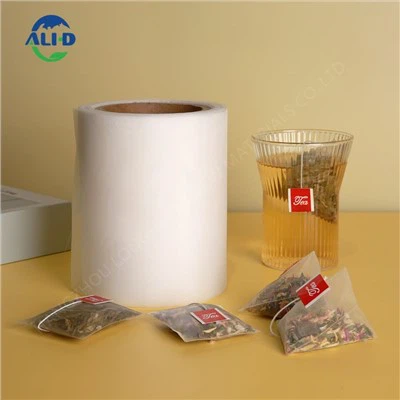
Polylactic acid (PLA) is a general term for a class of polymers made from starch polymerized from renewable plant resources (such as corn).
PLA has good mechanical and physical properties, good thermal stability, a processing temperature of 170~230°C, and excellent solvent resistance and degradability. In addition to being biocompatible, products made of PLA also have gloss, transparency, good heat resistance, certain antibacterial properties, flame retardancy and UV resistance, as well as excellent tensile strength and ductility.
PLA pure resin is a translucent or opaque granular amorphous polymer. It feels comfortable to touch, has a melting point of 175~185℃, and a glass transition temperature of 50~65℃.
PLA is composed of starch and has good biodegradability. After use, it can be completely degraded by microorganisms in nature, eventually generating carbon dioxide and water. It does not pollute the environment and is very conducive to environmental protection. It is recognized as an environmentally friendly material. Material.
When PLA is burned, it will never release toxic gases such as nitrogen compounds and sulfides. The human body also contains monomeric form of lactic acid D, fully demonstrating the high safety of this breakdown product.
PLA has its own numerical identification number, which is "7" according to the Society of the Plastics Industry (SPI).
PLA nonwoven fabric application.
PLA has excellent biocompatibility and biodegradability and is made from PLA fiber through a non-woven process. It is recognized as an environmentally friendly and sustainable green material in the 21st century. As a substitute for general plastics, countries around the world are deeply exploring and developing it, and it is gradually becoming more popular and used more and more. widely.
1. Industrial and agricultural fields
PLA non-woven fabrics can be used in agricultural covering materials, insect-proof nets, vegetable bags, seedling trays, construction films and ropes, fishing nets, kelp breeding nets, fishing lines, etc. It has breathability and excellent light transmittance, which can maintain the plant growth environment and increase yield.
2. Medical field
PLA non-woven fabrics are suitable for medical masks, surgical gowns, dressings, medical bandages, surgical sutures, medical device fixing materials, sanitary products, etc. It has good breathability and comfort and can effectively prevent infection.
3. Daily life
It can be made into cups, plates, saucers, pots, pots and other tableware.
4. Electronic and electrical appliances
The casings of electronic products such as computers are also used in equipment that operates at high temperatures, such as LCD projectors.
5. Packaging materials
PLA non-woven fabric is suitable for food container paper and plastic film, pharmaceutical packaging, household garbage bags, packaging film, gift packaging, etc. It has good waterproof, breathable and oil-proof properties, which can ensure the quality and hygiene of packaging.
6. Clothing field
Dyeable and biocompatible silk yarn knits, nonwovens and other garments.
7. Architectural decoration
PLA non-woven fabrics can be used for indoor decoration materials such as wallpapers, curtains, carpets, etc. They do not contain harmful substances and have good durability and aesthetics.
What are the advantages of PLA?
Biodegradable, environmentally friendly and pollution-free, soft and skin-friendly, the cloth surface is smooth and does not peel off, has good uniformity, good breathability and good water absorption.
1. Biodegradable: PLA non-woven fabric is made of polylactic acid (PLA) fiber, which is a biodegradable material that can be decomposed into carbon dioxide and water under certain circumstances and will not cause pollution to the environment.
2. Light and soft: PLA non-woven fabric is soft, light, has good air permeability and moisture resistance, and can be used to make fabrics, packaging materials, etc.
3. Antibacterial and deodorizing: PLA non-woven fabric has good antibacterial properties, can effectively inhibit the growth of bacteria, and has good deodorizing effect.
4. Good durability: PLA non-woven fabric has high durability, is not easy to wear and can be used repeatedly.
5. Heat resistance: PLA non-woven fabric can withstand high temperatures up to 100°C and is suitable for making products used in high temperature environments.
6. Dyeability: PLA non-woven fabric can change the color and pattern through dyeing and other processing processes, and has good aesthetic effects.
7. Customizable: PLA non-woven fabrics can be customized according to different needs. By changing parameters such as fiber thickness, density, color, etc., different performance and appearance effects can be achieved.