

Inside the Factory: The Precision Engineering and Uncompromising Quality Behind Premium Flying Saucer Drip Coffee Bags
Jan 22, 2026
Introduction: Where Innovation Meets Industrial Discipline
In the hands of a consumer, a Flying Saucer Drip Bag Filter is a simple promise: a perfect, convenient cup of coffee, anywhere. Yet, fulfilling this promise millions of times over, with unerring consistency across global markets, is a feat of modern manufacturing that borders on alchemy. It requires transforming rolls of delicate paper and pellets of polymer into a robust, intelligent, and food-safe brewing device that performs identically in a Tokyo high-rise, a Berlin café, or a Colorado campsite.
This article pulls back the curtain on this precise world. We journey inside the manufacturing ecosystem of Hangzhou Longhuida New Materials Co., Ltd., to document the engineering rigor, obsessive quality control, and integrated supply chain management that underpin every Disc Coffee Filter Bag we produce. For B2B clients, understanding this depth is not academic-it is the foundation of trust, scalability, and brand protection. This is the story of how a great idea becomes a globally reliable product.
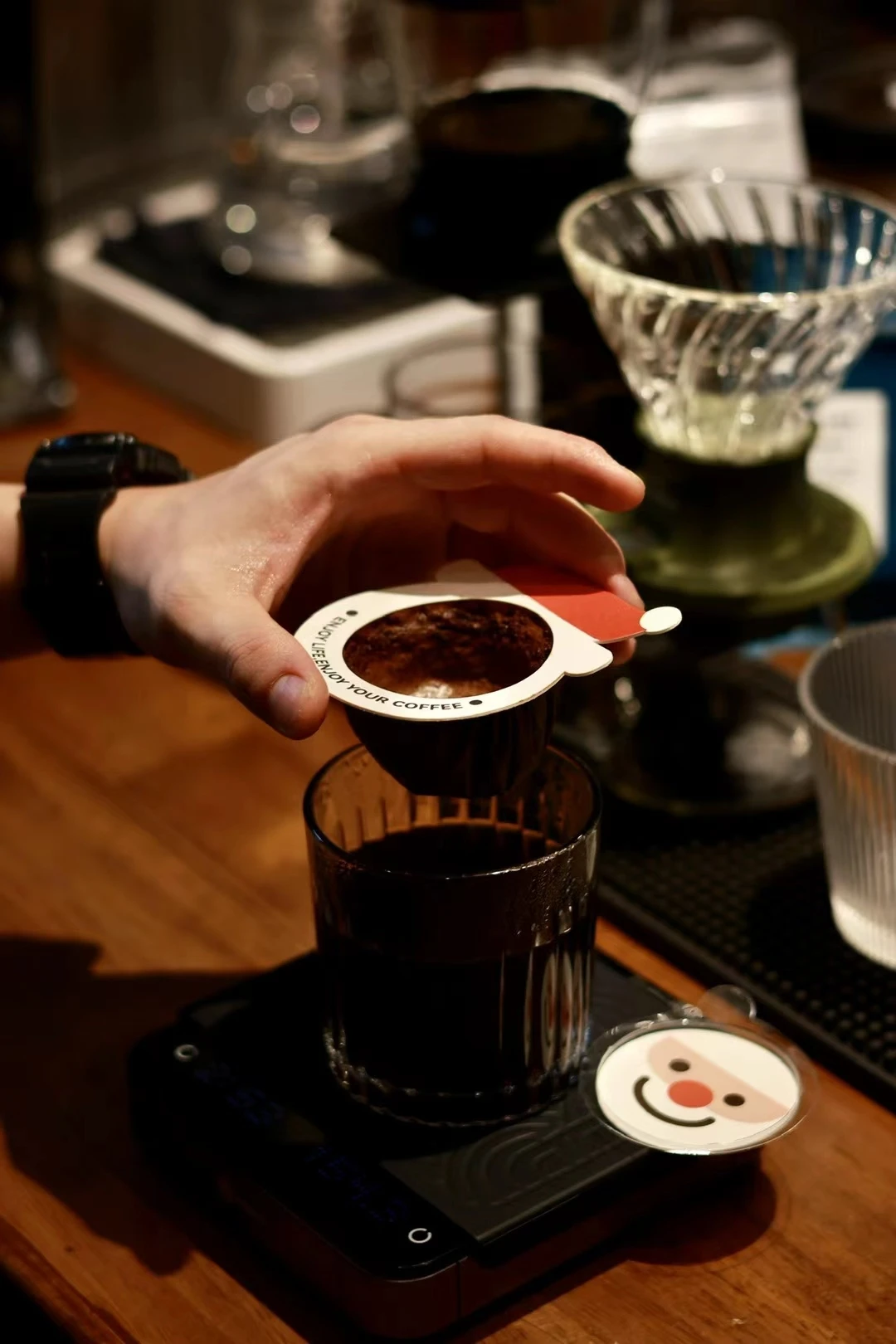
Part 1: The Foundry of Innovation – The R&D and Design Center
Long before a production line hums, the product is born in the R&D center. Here, the concept of the UFO Flying Saucer Drip Coffee is translated into quantifiable, manufacturable specifications.
1.1 From Sketch to Simulation:
The distinctive saucer shape is first validated through digital simulation. Computational Fluid Dynamics (CFD) models analyze water flow paths through the proposed filter paper and pouch geometry to optimize extraction efficiency and prevent dead zones. Finite Element Analysis (FEA) tests the structural integrity of the folds and seams under the weight of saturated grounds and hot water, ensuring the iconic shape won't collapse mid-brew.
1.2 Prototyping and Sensory Validation:
Once digital models are approved, physical prototypes are created using pilot-scale equipment. These prototypes undergo rigorous sensory validation panels. Professional Q-graders brew coffee with them, assessing not just for functionality (no leaks, stable stance), but crucially, for taste neutrality. The filter paper must impart zero papery or chemical taste, allowing the true profile of the coffee to shine. This phase determines the final specifications for paper porosity, grammage, and wet-strength treatment.
1.3 The Machinery Dialogue:
A critical, often overlooked, aspect of R&D is machinability. Our engineers work in tandem with machine designers to ensure the Flying Saucer Coffee Bag can be produced at high speeds (hundreds per minute) without compromise. This involves perfecting the precision of the die-cutting tools that create the signature shape, the heat-sealing jaws that form the liquid-tight seams, and the robotic arms that assemble the filter, label, and lid. The design is finalized only when it is both consumer-perfect and machine-friendly.
Part 2: The Anatomy of Raw Materials – Sourcing with a Microscope
The axiom "garbage in, garbage out" is paramount in food-contact manufacturing. Our quality story begins at the supplier audit.
2.1 Food-Grade Filter Paper: The Heart of the System:
We source specialty filter paper from certified mills. Each inbound roll is not just accepted with a certificate; it undergoes our own battery of tests:
Migration Testing: Ensuring no harmful substances migrate into food simulants under brewing conditions, exceeding FDA and EU standards.
Pore Size & Flow Rate Analysis: Using standardized equipment to verify consistency of extraction speed across batches.
Wet Burst Strength Test: Measuring the pressure required to rupture the saturated paper, guaranteeing it holds under a vigorous pour.
Compostability Certification Verification: For Compostable UFO Saucer Drip Coffee Filter Bag lines, we validate the supplier's ASTM D6400 or EN 13432 certificates and perform periodic biodegradation tests.
2.2 Polymers and Adhesives: The Unsung Heroes:
The plastic lid (for freshness) and the adhesive on the round label paper are held to the same stringent standard.
Lid Resin: We use food-grade, often recyclable polypropylene or polyethylene. Each batch is checked for odor, clarity, and seal performance. For advanced clients, we offer bio-based PLA options.
Food-Safe Adhesives: The adhesive bonding the label must be water-resistant after application but also non-toxic and odorless. Its application weight is precisely controlled to ensure a secure seal without ooze that could contaminate the brew.
2.3 The Aluminum Foil Option:
When an aluminum foil envelope is specified for extended shelf life, we use laminated foil that meets strict barrier properties for oxygen and moisture. Its sealing layer is designed for a clean, hermetic peel that doesn't tear the filter pouch within.
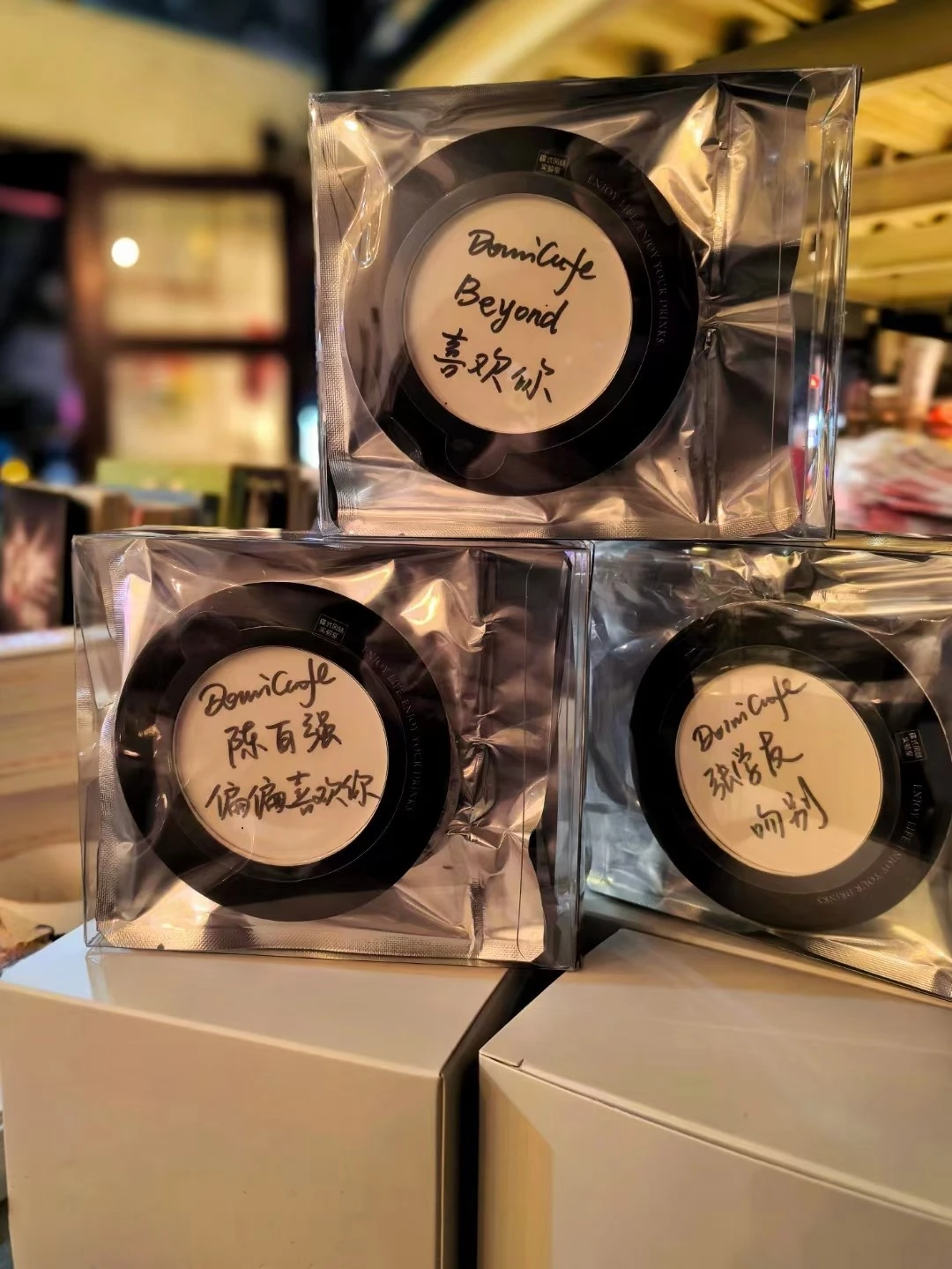
Part 3: The Symphony of Automation – A Walk Through the Production Line
Our factory floor is a choreography of synchronized automation, where raw materials are transformed into finished pouches with minimal human touch-a key factor in hygiene and consistency.
Station 1: Unwinding & Printing
Large rolls of filter paper are fed into high-precision flexographic or gravure printing presses. Using food-grade, soy-based inks, brand logos, instructions, and designs (for custom Christmas-Themed Circular Brew Drip Coffee Pouches or Chinese-Style patterns) are applied at high speed. In-line spectrophotometers constantly scan print quality for color consistency and registration.
Station 2: Die-Cutting & Forming
The printed paper web moves to a precision die-cutting station. Here, the two-dimensional Disc Coffee Filter Bag shape is cut out. Simultaneously, proprietary folding tools and ultrasonic or heat-sealing jaws form the three-dimensional saucer shape, creating the integrated stands and the seamless, leak-proof basket that will hold the coffee. This step is the mechanical core of the UFO Flying Saucer Drip Coffee structure.
Station 3: Assembly & Integration
In a single, fluid motion, robotic pick-and-place units:
Insert the pre-cut round label paper onto the sealing area.
Apply the plastic lid onto the label, creating the finished, sealed pouch head.
For foil-packed options, the finished pouch is then fed into a form-fill-seal machine, which wraps it in a nitrogen-flushed aluminum envelope for ultimate freshness.
Station 4: Vision Inspection & Packaging
Every single pouch passes under a bank of high-resolution industrial cameras. This vision system performs multiple checks in milliseconds:
Presence/Absence: Is the label present? Is the lid correctly seated?
Dimensional Accuracy: Is the cut shape perfect? Are the folds correct?
Print Quality: Are there any smudges or misprints?
Seal Integrity: Are the heat seals continuous and free of defects?
Any pouch failing any of these criteria is instantly and automatically ejected from the line. Approved pouches are counted and packed into bulk cartons, ready for shipment to brand partners for filling.
Part 4: The Inquisition of Quality – A Multi-Layer Assurance Protocol
Quality Control (QC) at Longhuida is not a department; it is a culture embedded in every process, supported by a multi-layered protocol.
Layer 1: In-Process Control (IPC):
Operators and automated systems monitor critical parameters every hour: seal temperature, cut pressure, adhesive application weight. Data is logged in real-time for full traceability.
Layer 2: Finished Goods Laboratory Testing:
From each production batch, statistically significant samples are pulled for destructive and non-destructive testing:
Brew Simulation Test: Pouches are filled with a standard medium-ground coffee and brewed with water at 92°C-96°C. The brew time, clarity, and final cup taste are evaluated.
Leak Test: Pouches are filled with hot water and suspended, inspected for any seam failure or droplet formation.
Weight and Measurement Check: Verifying pouch dimensions and component weights are within specification.
Peel Strength Test: Measuring the force required to remove the lid, ensuring it is easy for consumers but secure during transit.
Layer 3: Certifications and Audit Readiness:
We maintain a framework of internationally recognized certifications (e.g., ISO 9001 for quality management, BRCGS for packaging safety). Our facilities and processes are designed to be audit-ready at all times for global brand partners, providing them with confidence for their own supply chain approvals.

Part 5: The Engine of Partnership – Scalability, Supply Chain, and Client Collaboration
5.1 Elastic Manufacturing Capacity:
We understand market rhythms. Our production lines and planning systems are designed for elasticity. We can efficiently run a small batch of 50,000 custom Flying Saucer Drip Bag Filters for a startup's market test and seamlessly ramp up to produce millions per month for a multinational brand's national launch. This scalability protects clients from both overstock and stockouts.
5.2 Integrated Supply Chain Resilience:
As a one-stop solution provider, we manage the complexity upstream. Our procurement team secures long-term框架 agreements with raw material suppliers, insulating our clients from market volatility. Our warehouse and logistics network ensures just-in-time material availability for production and reliable outbound shipping of finished goods.
5.3 Collaborative Partnership Model:
For us, the most important product is trust. We engage with clients as true partners:
Transparent Communication: Clients receive regular production updates and have access to QC data for their batches.
Co-development: We work hand-in-hand with client R&D teams to develop new variants, such as a shallower pouch for tea or a larger size for 16-oz brews.
Problem-Solving: Our engineering team is available to troubleshoot any filling line compatibility issues at the client's facility, ensuring a smooth handoff from our production to theirs.
Conclusion: The Invisible Excellence in Every Pouch
The journey of a Flying Saucer Drip Bag Filter-from a roll of paper in a certified mill to a reliably perfect brewing device in a consumer's hands-is a testament to invisible excellence. It is an excellence built on engineering precision, material science, automated perfection, and an unwavering culture of quality.
For B2B clients, this behind-the-scenes reality is the ultimate risk mitigator and brand protector. Choosing a manufacturing partner with this depth of integrated capability means choosing a foundation of reliability upon which to build a brand's reputation. It means your marketing story of convenience and quality is fully backed by an industrial reality of discipline and precision.
In the competitive world of premium portable coffee, the battle is won not just by the idea, but by the impeccable execution of that idea, billions of times over. This is the discipline we bring to the partnership, and the promise sealed into every pouch we produce.

Build Your Brand on a Foundation of Manufacturing Excellence.
Partner with a manufacturer whose quality controls and engineering rigor match your brand's ambitions. Let us show you how our integrated process from R&D to delivery can provide the reliable, scalable foundation for your UFO Drip Coffee Bag success.
Contact us to discuss your project requirements and schedule a virtual factory tour.
Hangzhou Longhuida New Materials Co., Ltd.
Email: longhuida@teabagpacking.com
Telephone: +86 18006817533
Address: 3-1-503, Marriott Plaza, Xiaoshan Economic Development Zone, Hangzhou, Zhejiang, China
Where Your Product Vision Meets Our Manufacturing Precision.